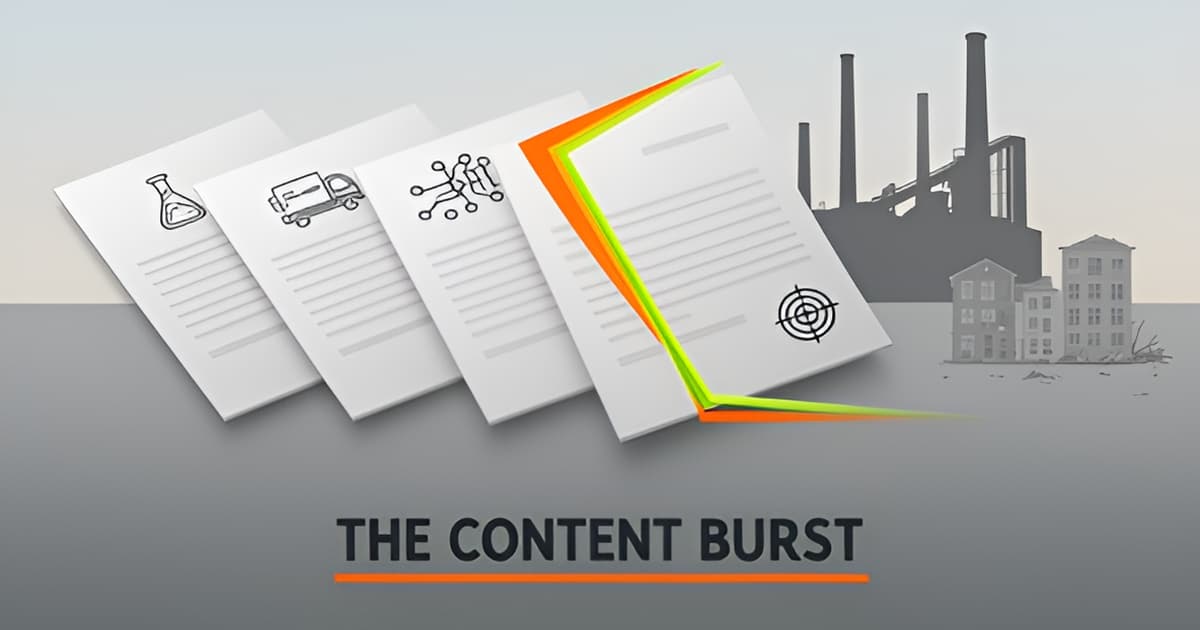
On October 26, a Pune-based B2B growth agency called MOTM Technologies published four press releases in a single day. Each one targeted a different industrial niche: specialty chemicals, logistics and 3PL, industrial IoT and sensors, and a general piece on mapping decision-makers. All four ran on the same free distribution network, all four followed the same template, and none of them named a client, a price, or a number you could check. If you work in B2B outreach, that burst tells you something useful about where the market is heading and who's still being left out.
Key points
- MOTM Technologies published four templated press releases on October 26, 2026, each targeting a different industrial niche: chemicals, logistics/3PL, industrial IoT, and general decision-maker mapping.
- All four releases follow an identical structure and offer no pricing, client names, or quantified results, suggesting the campaign is primarily an SEO and lead-gen play.
- MOTM's positioning leans on qualified leads and multichannel ABM, contrasting with high-volume single-touch form outreach that prioritizes speed to pipeline.
- The niches MOTM chose share long sales cycles and multi-stakeholder buying committees, which suits its methodology-focused pitch.
- Small B2B service firms (agencies, MSPs, staffing, commercial services) remain largely underserved by outreach agencies chasing industrial enterprise accounts.
Strip away the industry framing and the four releases are one release, stamped out four times. Each opens with a problem statement, explains a service, lists a bulleted methodology, and closes with a call to action offering a free template via the company's website. The boilerplate is identical across all four. This is programmatic content production, built to rank for searches like "B2B lead generation for chemical companies" rather than to announce anything newsworthy. That's a legitimate tactic and a cheap one. Publishing four releases on a free network costs almost nothing, and if even one vertical keyword sticks in search results, the effort pays for itself. But it also signals something about the agency doing it: they're fishing for inbound interest, not demonstrating results. When a service provider's main public-facing argument is a process description with no case studies attached, you should read it as a pitch, not proof.
There's a real argument buried in MOTM's material, and it's worth taking seriously. Their chemicals release argues that chemical leads need technical qualification before samples ship, and that you should track validation milestones like trials and regulatory documentation before counting a lead as real. The industrial IoT piece makes a similar case: generic cold email fails with technical buyers like maintenance managers and plant heads, because industrial buying cycles are long and evaluation criteria are unforgiving. The decision-maker mapping release pushes the same theme further, advocating that you map entire buying committees across engineering, operations, procurement, and finance rather than chasing a single contact. All of this is sound advice for the deals MOTM is describing. If you're selling sensor systems into a plant, you genuinely do need a committee, a qualification framework, and patience. The question for a buyer of outreach services is whether your business actually resembles that plant.
Here's the part the methodology-focused pitch tends to gloss over. Most small B2B service firms don't sell six-figure industrial systems. An MSP pitching managed IT to local businesses, a staffing firm courting regional employers, a cleaning company targeting commercial properties: in these businesses, the decision-maker is often the owner, and the decision is made in days or weeks, not quarters. For those offers, the bottleneck isn't committee mapping. It's reach. Getting your offer in front of a thousand relevant businesses this month matters more than building an elaborate account-based motion around fifty of them. Done-for-you form outreach works precisely because it collapses the setup cost: no hiring, no configuring sequences, no learning a stack. You define a niche and a region, personalized messages go out at scale, and interested replies get routed back to you while the conversation is still warm. Speed to pipeline is the whole point, and for an SMB service firm it's usually the difference between a decent quarter and a flat one.
MOTM's messaging leans hard on "qualified meetings over raw activity metrics," and that framing is aimed directly at high-volume competitors. It's a fair objection, and volume-only providers deserve it. Sending 5,000 messages means nothing if the replies are junk or if you can't tell a genuine "yes" from a courtesy response. But the objection assumes volume and qualification are opposites, and they aren't. A modern single-touch campaign can classify replies with AI, flag the interested ones, and route them to the client within minutes. It can report honestly on attempted versus confirmed versus failed deliveries, with reasons attached. The real dividing line isn't volume versus quality. It's whether the provider can show you, per business, what happened and why. That's a standard any outreach buyer should demand, whether the vendor sends 500 messages or 15,000.
Look at the verticals boutique outreach agencies keep choosing: chemicals, logistics, industrial IoT, manufacturing. These are attractive because deal sizes are large and clients can pay retainers. But the aggregate purchasing power of small service businesses is enormous, and their needs are simpler and faster to serve. A marketing agency that wants twenty new client conversations this quarter doesn't need ABM. It needs targeting that's actually tight, messages that don't read like spam, and replies routed in real time. Pricing transparency matters here too. MOTM's releases disclose nothing about cost, which forces every prospect into a discovery call before they can even compare. Published, tiered pricing, starting with a low-risk pilot a buyer can run in a week, removes that friction. In a market crowded with lookalike agencies, being the provider who says "here's the price, here's what you get, here's the report" is a genuine differentiator.
MOTM's four-release burst is a well-executed piece of SEO marketing, and its underlying argument about qualification is correct for the long-cycle industrial deals it describes. But it's also a reminder that the outreach market has split into two models, and buyers should pick based on how they actually sell. If your offer needs a committee and a nine-month evaluation, invest in account-based methodology. If you're an SMB service firm that needs your offer in front of a thousand relevant businesses this month and interested replies routed to your inbox while they're fresh, volume with honest reporting beats process every time. The agencies that win the small-business half of this market will be the ones that make the second option effortless to buy.