The way businesses buy things has changed. It used to be a matter of volume. You sent more emails, you ran more ads, you hoped the message stuck. That model is breaking. A new study from Vereigen Media, released this week, highlights a stark reality: the attention economy is shrinking. Decision-makers are skimming faster, considering more vendors, and spending less time on each one. For B2B outreach teams, this means the old playbook of mass emailing is not just inefficient, it is invisible.
Key points
- B2B decision-makers now spend only 37 minutes per week on vendor content, down from 82 minutes in 2018.
- Professionals receive an average of 121 emails daily, causing significant inbox fatigue.
- Personalized messages generate 30 to 50 percent more responses than generic outreach.
- The 'dark funnel' accounts for 67 percent of the B2B buying journey, outside traditional tracking.
- AI-driven personalization allows small teams to achieve scale without sacrificing relevance.
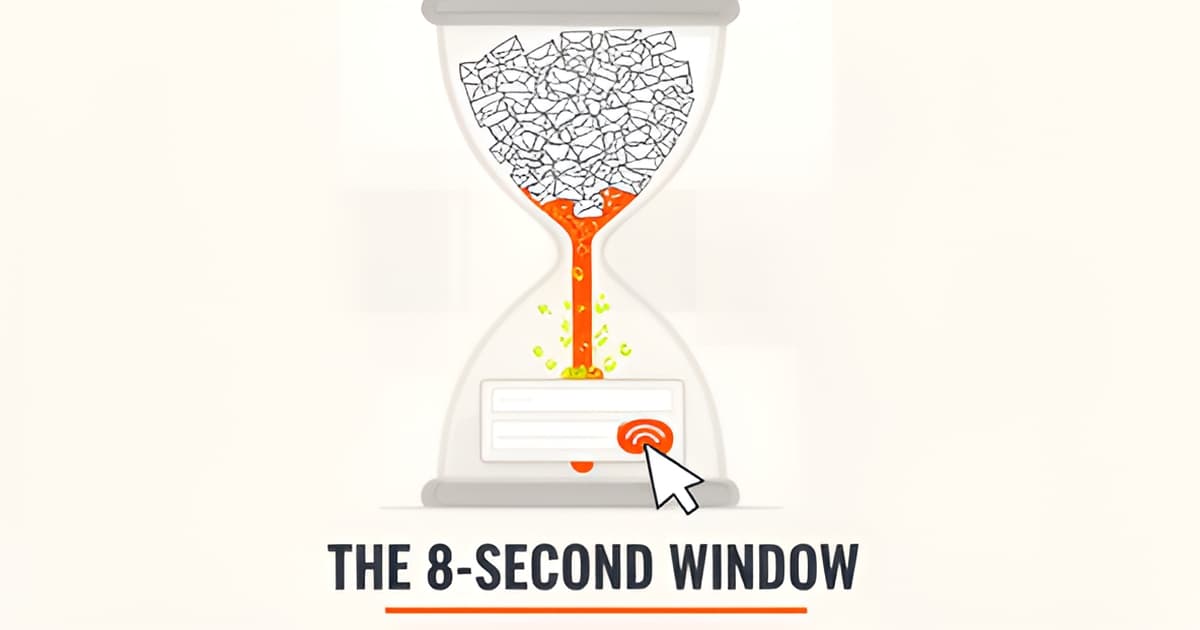
Let's look at the numbers. In 2018, enterprise decision-makers spent about 82 minutes a week evaluating vendor content. By 2025, that figure has dropped to roughly 37 minutes. That is a 55 percent decline in time spent per vendor, while the number of vendors they consider has risen by 30 percent. You are competing for a smaller slice of a shrinking pie. The study notes that early engagement windows have narrowed to about eight seconds. If your message does not grab attention in that blink, it is gone. With 121 emails landing in a professional's inbox every day, the barrier to entry for relevance is higher than ever. You cannot rely on volume to cut through the noise. You need precision.
The data is clear on this point. Personalized messages generate 30 to 50 percent more responses than mass outreach. The study also points to a significant gap in email performance. Personalized email sees a 29 percent open rate and a 5.2 percent click-through rate. Generic email sits at 21.5 percent and 2.3 percent. That is not a small difference. It is the difference between being ignored and being considered. AI has changed the economics of this. In the past, writing a unique message for every prospect was too expensive and slow for most teams. Now, it is possible. You can use AI to analyze a business's real data, write a message that speaks to their specific situation, and have it quality-checked before it goes out. This allows you to maintain a human touch at a scale that was previously impossible. It is not about using AI to sound like a robot. It is about using AI to sound like you actually did your homework.
Here is a statistic that should make you pause. According to the study, 67 percent of the B2B buying journey happens in the 'dark funnel.' This includes peer conversations, reviews, and community discussions that traditional marketing analytics cannot track. If most of the decision-making happens outside your tracking pixels, you need a channel that reaches the buyer directly, without relying on them to click a link. Contact forms are one of the few channels that allow you to place your offer directly in front of the business, on their own platform, without waiting for them to open an email or visit your website. It is a direct line to the decision-maker. It bypasses the inbox clutter and the ad fatigue. It gets your message to the person who actually runs the business, in a context they control.
As you move into this new landscape, the question is not 'how many people can I reach?' It is 'how many relevant people can I reach, and how quickly can I get their response?' The study emphasizes that investment is shifting from content volume to measurable engagement quality. This means your guarantee to the client should not be about reply rates. You cannot guarantee that a human will reply. What you can guarantee is targeting quality. You can guarantee that the message is personalized and relevant. You can guarantee that the delivery attempt was made and that the sender is identified honestly. You can guarantee that opt-outs are honored. You can guarantee transparent reporting on what was attempted, what was confirmed, and what failed. This approach builds trust. It aligns with the buyer's desire for credibility and relevance. It respects their time. And it sets you apart from the vendors who still promise 'guaranteed leads' without backing it up with data.
One more thing to consider. More than 60 percent of B2B research happens on mobile devices. This means your offer, and your reply routing, needs to be mobile-optimized. If a business owner gets a reply from you, they will likely read it on their phone. If your follow-up is clunky or hard to navigate on a small screen, you lose them. Furthermore, the study notes that AI-scored leads convert twice as fast as manually scored ones. This highlights the importance of speed. If you can classify a reply as 'interested' and route it to the client within minutes, you are giving them a massive advantage. You are turning a passive form submission into an active sales conversation. This is where the real value lies. Not in the volume of forms filled, but in the speed and quality of the conversations they start.
The B2B landscape is not getting easier. It is getting more crowded and more impatient. But that is a good thing for those who are willing to adapt. The buyers are there. They are just harder to reach. By focusing on relevance, precision, and direct channels, you can cut through the noise. You don't need to shout louder. You just need to speak clearly, to the right person, at the right time. That is the new standard. And it is the only one that works.